

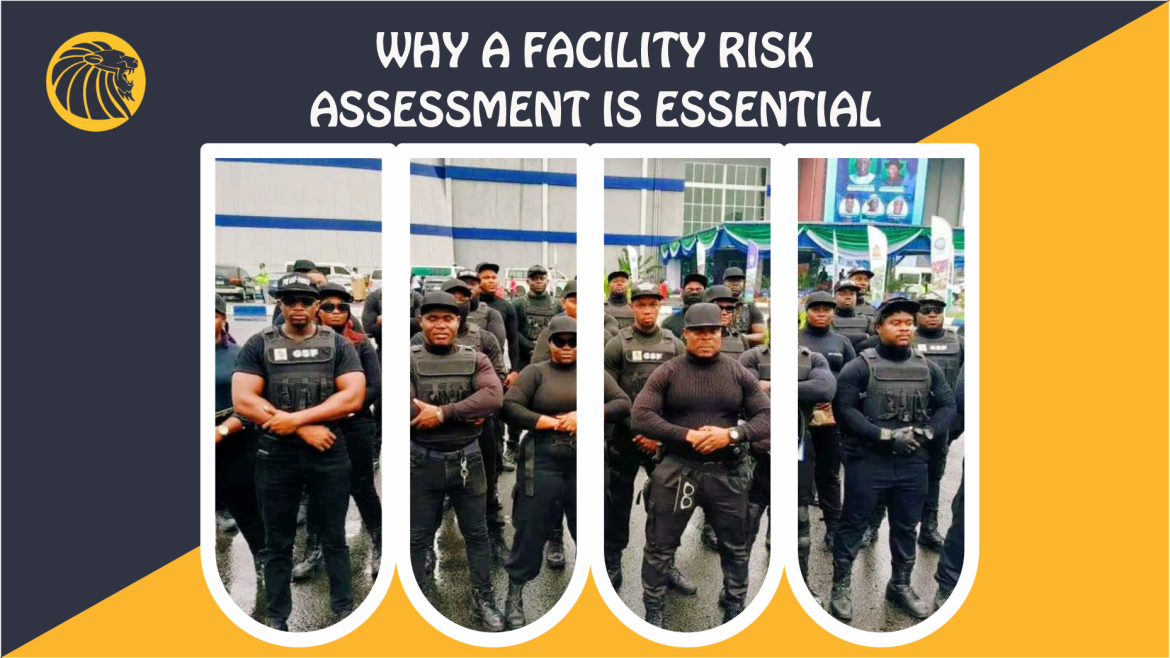
Every facility—be it an estate, office, church, retail space, warehouse, or industrial site—faces inherent risks that can disrupt operations, damage assets, and endanger people. Hazards such as electrical faults, structural weaknesses, fire risks, and security vulnerabilities can escalate into serious incidents if not identified and addressed early.
This is why Facility Risk Assessment is the cornerstone of Kings Unique Security’s (KUS) preventive strategy. Instead of reacting to emergencies, we empower organizations to identify risks ahead of time and implement effective, proactive safeguards.
What is a Facility Risk Assessment?
A facility risk assessment is a structured, systematic process designed to safeguard your organization. It helps you to:
- Identify hazards and potential threats in your specific environment.
- Determine the likelihood and frequency of those hazards occurring.
- Understand the potential impact (e.g., injury, loss, downtime, damage).
- Implement practical control measures to eliminate or significantly reduce the risks.
The objective is clear: prevent incidents and protect lives, assets, and business continuity.
The KUS 7-Step Risk Assessment Process
At Kings Unique Security, our risk assessment follows a clear, practical, and results-oriented methodology to ensure comprehensive coverage.
1. Planning & Scoping
We begin by clearly defining the scope of the assessment. This could be an entire facility, specific departments, operational areas, high-value asset zones, or security-sensitive perimeters.
2. Site Walkthrough & Inspection
Our trained safety and security specialists conduct a structured, on-site inspection to observe and document the facility’s condition, including:
- Security: Access control points, perimeter integrity, surveillance blind spots.
- Fire Safety: Fire extinguisher placement, emergency equipment, and evacuation routes.
- Physical Hazards: Slippery surfaces, obstacles, trip hazards, and poor lighting.
- Utilities: Electrical setups, potential overloads, and infrastructure weaknesses.
- Operations: Storage practices, housekeeping standards, and general work patterns.
3. Hazard Identification
We meticulously document specific threats and vulnerabilities, such as:
- Security Risks: Unsecured entry points, weak perimeter fencing, unauthorized access.
- Fire Risks: Combustible storage, non-functional fire equipment.
- Safety Risks: Electrical faults, poor lighting, obstructed emergency exits, slip/fall hazards.
- Equipment Risks: Unsafe or inadequately maintained equipment.
4. Risk Evaluation
Each identified hazard is systematically rated using a standardized matrix based on two critical factors:
- Likelihood: How often could this event reasonably occur?
- Impact: What is the potential severity of damage, injury, or operational loss?
This objective process categorizes risks as high, medium, or low priority, allowing for focused resource allocation.
5. Recommendations & Control Measures
KUS provides practical, actionable solutions tailored to your facility. These may include:
- Upgrading CCTV coverage and improving lighting.
- Implementing access control systems and strengthening perimeters.
- Adjusting guard deployment and patrol patterns.
- Addressing electrical load balancing and necessary repairs.
- Improving housekeeping and installing proper safety signage.
6. Reporting
A clear, concise, and professional report is delivered, detailing:
- All identified risks and their priority ratings.
- Recommended actions (the control measures).
- Photo evidence for visual context.
- Required resources and implementation timelines.
7. Follow-Up & Monitoring
Our process includes follow-up support to track progress and ensure that all corrective measures are implemented effectively and on schedule, completing the risk management cycle.
Common Risks Kings Unique Helps to Address
Our assessments are designed to uncover the vulnerabilities that often go unnoticed during day-to-day operations:
- Security: Unsecured gates and entrances, broken fences, surveillance blind spots.
- Fire Safety: Non-functional or expired fire equipment, blocked emergency exits.
- Safety: Overloaded electrical circuits, poor outdoor and indoor lighting, slippery floors, and uneven walkways.
The KUS Advantage: Why Your Assessment Matters
A comprehensive risk assessment is more than a checklist; it’s a strategic investment that delivers tangible benefits:
- Prevent Accidents: Significantly reduce the risk of injuries and accidents.
- Reduce Costs: Minimize downtime, unexpected repairs, and liability expenses.
- Enhance Security: Strengthen overall security effectiveness against intrusion and theft.
- Ensure Compliance: Help meet regulatory and insurance requirements.
- Improve Efficiency: Optimize the use of physical and personnel resources.
Kings Unique Security combines deep expertise, extensive field experience, and industry best practices to deliver assessments that are Accurate, Practical, and Solution-Focused. We don’t just identify risks—we help you eliminate them.
Conclusion
Every facility carries risks, but the vast majority of incidents are preventable with a structured, professional assessment.
Don’t wait for an incident to occur. Let Kings Unique Security help you uncover hidden threats and build a safer, more resilient environment for your people, property, and operations.